If you’ve got a bit of a sweet tooth but are starting to look for healthier snack options, revamping traditional candy is definitely worth checking out. Classic treats can be loaded with sugar, artificial colors, and who-knows-what else, but that doesn’t mean you have to give up candy completely. A healthy makeover is actually fun, and the bonus is you can usually eat more without feeling sluggish or guilty. Here, I’m sharing my approach to updating candy favorites, the latest trends I’ve spotted, and some practical guidance so you can satisfy cravings in a way that fits your goals.
Why Reimagine Traditional Candy?
Candy has been a go-to treat for ages, but so many options out there are packed with sugar, high fructose corn syrup, and artificial ingredients. When I started looking into alternatives, it was mostly because I noticed how much of a sugar crash I’d get after a handful of commercial gummies or chocolate bars. The rise in lifestyle-related illnesses and all the nutrition information we have now makes it pretty important to think about what’s in our treats.
The candy industry is huge,allergen-friendly worth over $200 billion globally, so it’s no surprise that healthier versions are popping up everywhere. More people are hunting for treats with natural sweeteners, better-for-you ingredients, and allergen-friendly options. You’ll find fruit-based bars, low-sugar chocolates, and even plant-based gummies on shelves now. Swapping out just a few things in your favorite recipe makes a difference, and sometimes the healthy version is even tastier.
Core Swaps for a Healthy Candy Makeover
I’ve tried plenty of candy makeovers at home, and the real magic is in the swaps. You don’t need fancy tools, just a few simple tweaks to your ingredient list. Here’s what I look for, plus easy swaps you can make for most recipes:
- Natural sweeteners: Instead of refined white sugar or corn syrup, I go with honey, pure maple syrup, coconut sugar, or dates. They give a deeper flavor and cause fewer sugar spikes.
- Whole ingredients: Classic fillers and artificial colors can easily be changed out for real fruit, nuts, seeds, or even oats. Dried berries, roasted peanuts, and shredded coconut are go-tos for me.
- Dark chocolate over milk: I swap out milk chocolate for options that are 70% cacao or higher. Less sugar, more antioxidants, and in my opinion, a much richer taste.
- Color from nature: Instead of artificial dyes, I use fruit powders (strawberry, blueberry, matcha) or even beet juice for vibrant colors.
- Bitesized pieces: Not exactly an ingredient, but making smaller portions helps me slow down and makes it easier to just have a bit at a time.
Trending Healthy Candy Styles
I keep an eye on new candy launches, and I’ve seen a few trends really take off. These healthier styles are cropping up both in stores and across social media. Worth trying if you’re looking for inspiration:
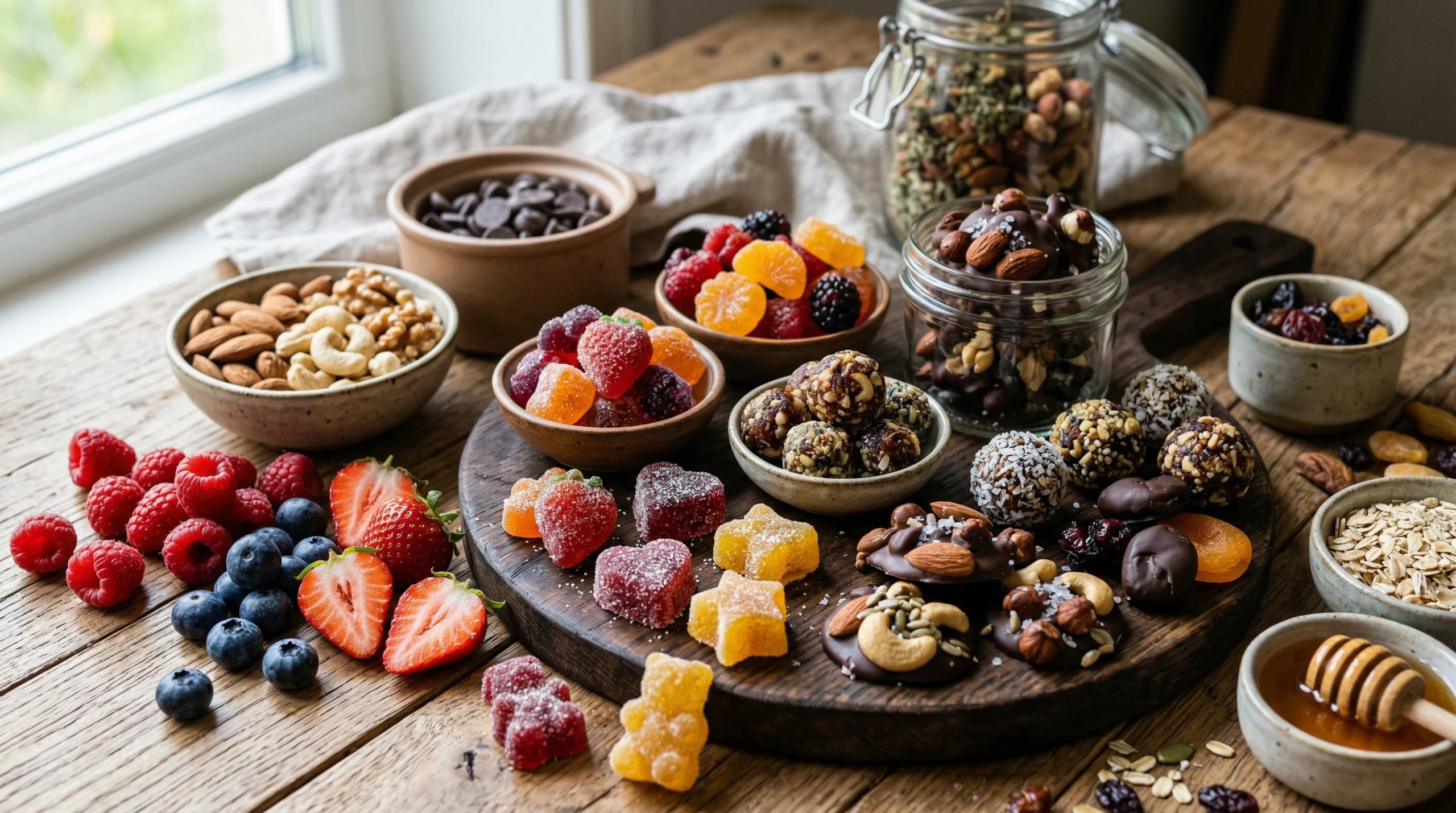
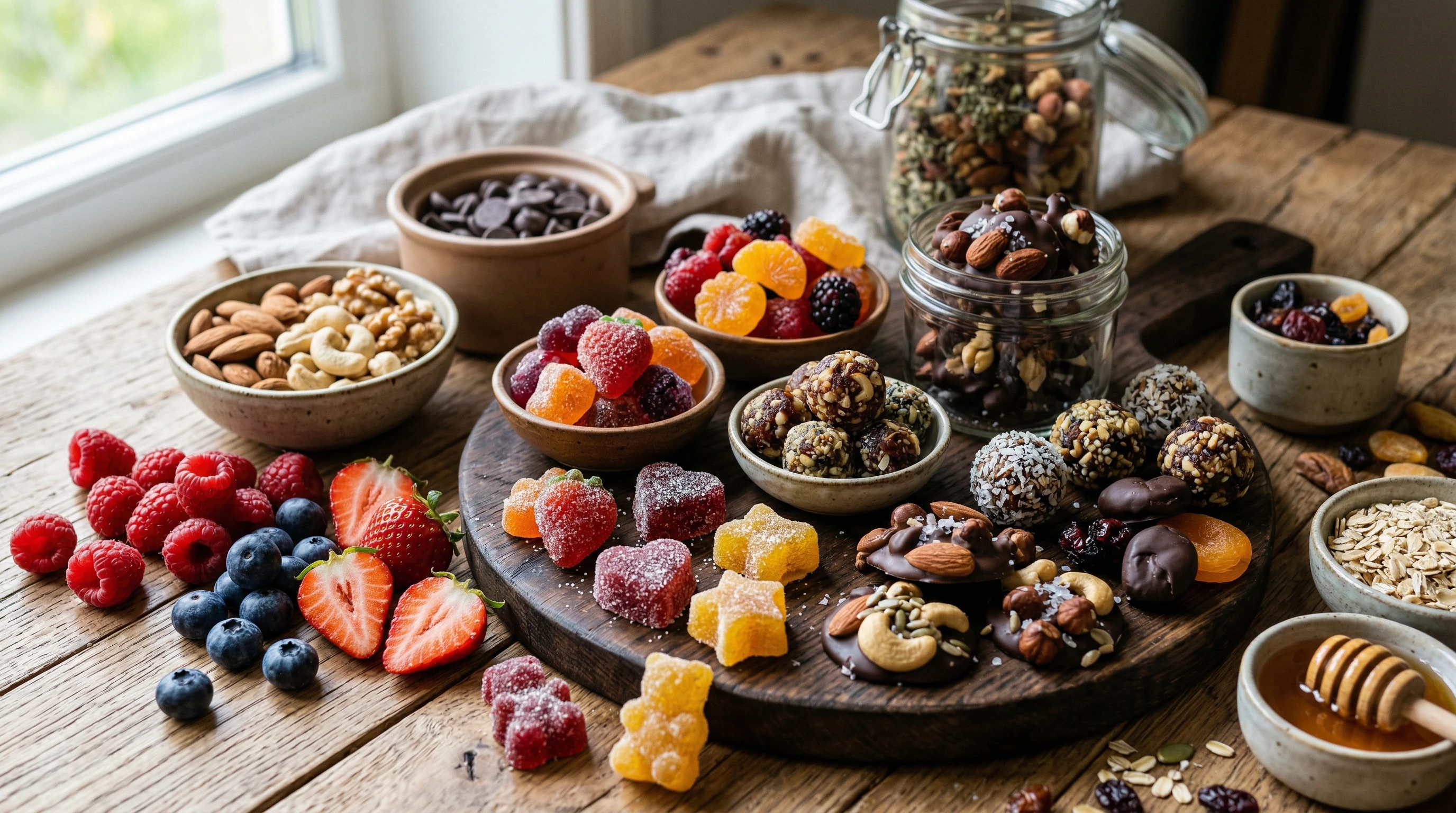
- Fruit-based gummies: Made with real fruit purees and pectin or agar agar instead of gelatin, these are chewy and naturally sweet.
- Nut and seed clusters: Roasted nuts held together with a drizzle of honey or brown rice syrup, then cooled into crunchy, protein-packed bites.
- “Raw” energy balls: Blending dates, nut butter, cocoa powder, and extras like chia or flax for rich, no-bake treats; basically candy bars without added sugar.
- Dried fruit chews: Simple mango, pineapple, or apple slices, dried until chewy. Dust with a bit of cinnamon or roll in coconut for a fun twist.
- Chocolate bark: Melted dark chocolate topped with goji berries, walnuts, sunflower seeds, or coconut flakes. Let it set and snap into pieces.
Making Healthy Candy at Home: My GoTo Basics
There’s something fun and satisfying about making your own candy. Especially when you know what’s in it. I’ve perfected a few easy recipes that I turn to when cravings hit and I want something quick. Here are some of my favorites:
- DateNut Truffles: Blend pitted dates, cocoa powder, and your favorite nut butter. Roll into balls and coat with shredded coconut or crushed pistachios.
- Chewy Berry Gummies: Simmer blended berries with a little honey and pectin. Pour into molds and chill until set; these are a hit with kids and adults.
- ChocolateDipped Nuts: Melt 70% dark chocolate, dip almonds or cashews, and sprinkle with a pinch of flaky salt. Cool until set, great for that classic sweet-salty fix.
- DIY Fruit Leather: Puree ripe fruit, spread thin on a lined baking tray, and slowly bake at low heat for a few hours. Peel and cut into strips for a snacking treat you can take anywhere.
The cool thing here is that most of these recipes don’t need special gear; a sturdy blender or food processor usually does the trick. If you want to mix things up, try tossing in extra flavors like vanilla or citrus zest, or roll your truffles in cacao nibs for extra crunch and antioxidants. Homemade candy is also a fun way to get creative with kids, letting them shape and decorate their own snacks.
What to Watch Out for at the Store
If you prefer convenience or don’t have time for homemade, shopping for healthier candy is pretty straightforward once you know what to look for. Here’s my checklist when I’m in the aisle:
- Check the sugar content: Even healthy-looking treats can surprise you with sneaky sugars. Aim for single digits per serving if possible.
- Natural colors and flavors: Look for “naturally flavored” or check for recognizable ingredients like beet juice, turmeric, or spirulina.
- Short ingredient lists: Fewer ingredients usually signals less processing and fewer artificial additives.
- Watch for sugar alcohols: Some low-sugar candies use erythritol or sorbitol. They’re not bad for everyone, but I steer clear if they upset my stomach.
- Certifications: If allergies are a concern, labels like “gluten-free,” “nut-free,” or “vegan” are helpful for peace of mind.
One thing to keep in mind is that healthy doesn’t always mean low-calorie. Some natural sweeteners and nuts are higher in calories, so check serving sizes if you’re watching intake for specific goals. Reading reviews and checking for reputable brands also helps you avoid the occasional dud in the healthy candy aisle. A little prep time can save you disappointment (and a sugar crash) later.
Common Challenges and How to Tackle Them
Tweaking traditional candy recipes usually comes with a few hiccups. Here are a few issues I’ve run into, plus what works for me:
- Texture troubles: Swapping out sugar or corn syrup can change the chew or snap you expect. Using things like pectin, fruit purees, or nut butters helps keep the right consistency.
- Taste intensity: Natural sweeteners sometimes aren’t as strong as sugar. Adding a tiny splash of vanilla or a bit of citrus zest goes a long way to boost flavor.
- Melting and setting: Homemade chocolate or gummies can be sensitive to temperature. I store them in the fridge and use parchment for easy cleanup.
Homemade candy that’s lighter on sugar or uses alternative ingredients can be a little different from what you’re used to, but stick with it. The taste and feel get easier to nail with a bit of practice, and sometimes the healthy version actually becomes your new favorite. Plus, as you gain more confidence, you may end up customizing your candies to small personal preferences—whether it’s extra crunch, increased chewability, or a bigger nutritional punch.
Advanced Tips for Healthy Candy Lovers
If you’ve already got the basics down, there are some extras you can try to really take things up a notch:
Experiment with spices and extracts: Cinnamon, cardamom, ginger, or extracts like almond, mint, or orange can totally change the vibe of your treats. Even a sprinkle of flaky salt or hot pepper flakes on chocolate can turn plain bark into something unique.
Try seed and nut blends: Mixing pumpkin seeds, hemp, or sunflower seeds into clusters and bars adds crunch, protein, and healthy fats. This also keeps every bite interesting and satisfying.
Use superfood add-ins: A spoonful of chia seeds, matcha, or goji berries adds a nutrition boost to barks and bites without changing flavor too much. Spirulina and acai powder also add color and healthy antioxidants.
Play with portion sizes: Silicone molds in fun shapes make candy more fun and can help control how much you eat at once. Reusable molds also make cleanup easier and open the door to designing themed treats for parties or holidays.
These advanced tweaks don’t require much extra effort, but they do make healthy candy feel a lot more special and tailor-made. Over time, you can even start to exchange tips with friends or start a swap group where everyone tries new combos and flavors; it’s a tasty way to build community around better snacks.
RealWorld Examples: How Healthier Candy Fits Everyday Life
Healthy candy isn’t just a trend; it’s something you can work into everyday routines, with a few practical bonuses. I’ve brought homemade berry gummies on a road trip for an energy boost, kept dark chocolate clusters at my desk as an afternoon treat, and even swapped out regular candy for energy balls at parties to rave reviews. If you want to dig deeper, brands like SmartSweets, Unreal, and Hu Chocolate are all over stores now with good healthy options. Reading reviews and checking ingredient lists helps you find your favorites.
- On-the-go post-workout snacks: Stash dried fruit strips or nut clusters in your bag for a quick snack that beats almost anything from a vending machine.
- Gift giving: A box of homemade treats wrapped in parchment and tied with twine makes for a thoughtful, tasty present.
- Kids’ parties: Gummy molds and fun shapes get kids excited about betterforyou treats. Plus, fewer hyperactive sugar rushes.
- Fitness fuel: Date or nut bars give solid pre or post-workout energy, no fake ingredients required.
If you’re looking to cut back on commercial sweets, try swapping in healthy candy for dessert or snack time just a couple days a week. Keeping a bag of homemade gummies handy gives you a sweet reward after lunch, while nutty chocolate bark pairs perfectly with a cup of green tea for an afternoon pick-me-up. Many of these treats also double as healthy desserts—making them ideal for family gatherings, potlucks, or even holiday gifts. More folks are moving toward natural ingredients, so healthy candy is likely to grow even more popular as time goes on.
Frequently Asked Questions
Here are a few questions I get from friends when they spot my healthy candy creations:
Question: Can homemade healthy candy be stored at room temperature?
Answer: Some treats, like chocolate bark or nut clusters, keep fine in a sealed container at room temp for a few days. Gummies and anything with fresh fruit are better off in the fridge.
Question: Do healthy candies taste different from regular candy?
Answer: Sometimes yes, because the flavors are more natural and less sweet. I actually like the depth more, and with good recipes they’re just as satisfying.
Question: Are healthier candies safe for people with food allergies?
Answer: Many homemade versions are free of gluten, dairy, or nuts, depending on your ingredients. Always check packaged labels and ingredient lists to be sure if buying premade.
Wrapping Up
Revamping traditional candy into something healthier makes snacking feel good again. With so many creative swaps and styles to try, you don’t have to miss out on sweets to stick to your health goals. Whether you’re in the mood to make candy at home or just want tips for smarter shopping, the options are pretty wide open, so have fun with it and enjoy every bite. With just a little creativity and a willingness to try new things, you might just stumble upon your next favorite treat—one that tastes amazing and leaves you feeling good, too.